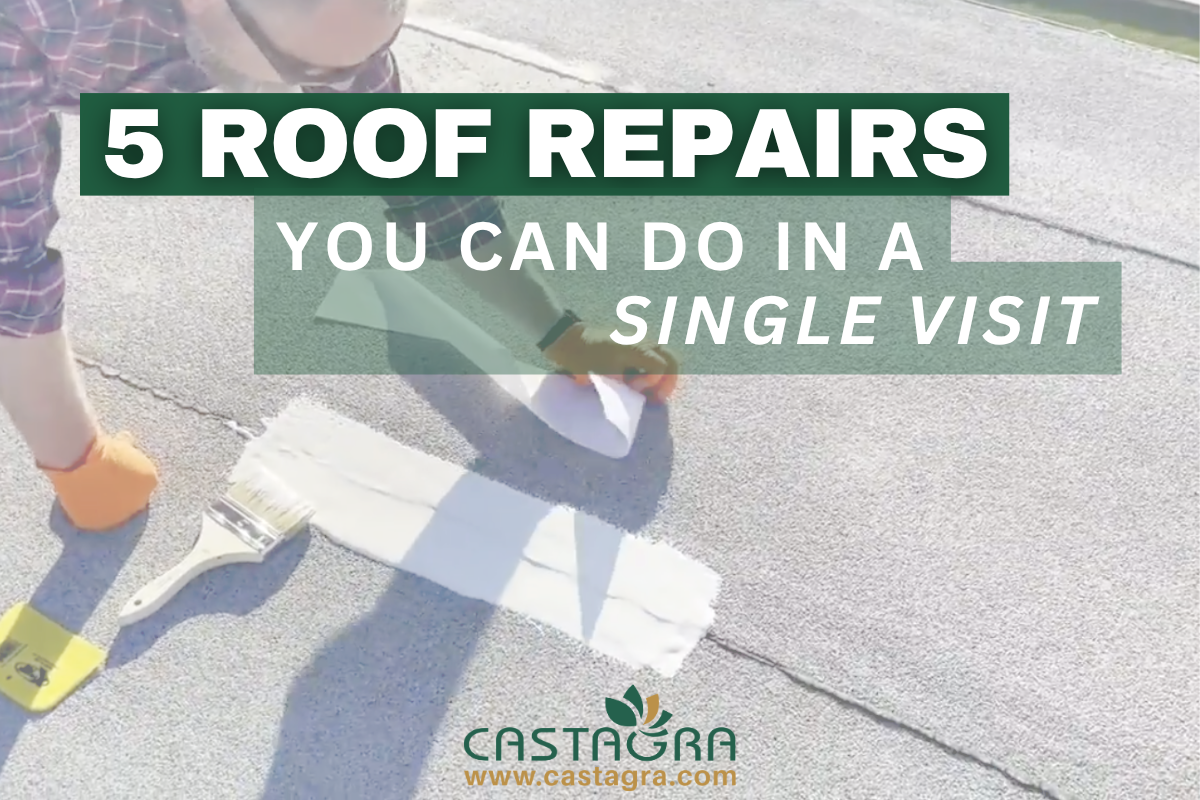
5 Roof Repairs You Can Do In A Single Visit
Not every commercial roofing issue needs a full restoration project.
One of the most cost-effective ways to maintain a commercial roof is to bundle multiple small repairs into a single service visit. It reduces labor costs, minimizes disruption for building occupants, and most importantly, stops small problems from turning into expensive failures.
The challenge is that many crews treat these issues individually instead of strategically. A seam gets sealed one week, a puncture gets patched the next, and a flashing issue gets pushed to another visit. That approach adds time, cost, and risk.
A more efficient method is simple: identify, group, and repair multiple common issues in one trip using the right materials and a ready-to-go repair kit.
Instead of scrambling for materials or improvising on site, crews can handle multiple repair types consistently and correctly in a single visit.
Below are five of the most common commercial roof repairs that can—and should—be handled together whenever possible.
1. Sealing Open Seams
Seams are one of the most common failure points on commercial roofs, especially on single-ply systems like TPO or EPDM.
Over time, seams fail due to:
- Thermal expansion and contraction
- Adhesive breakdown
- Foot traffic and movement
- Poor original installation or aging materials
What starts as a minor separation can quickly turn into a leak pathway.
WHAT A PROPER SEAM REPAIR LOOKS LIKE
A reliable seam repair isn’t just “covering the gap.” It follows a process:
- Clean the area thoroughly – remove dirt and contaminants
- Dry the surface completely – moisture ruins adhesion
- Apply compatible repair material – something that bonds properly to the existing roof system
- Reinforce the seam line – especially in high-movement areas
Having Patch & Repair Kits on hand makes a real difference. The result isn’t just a quick fix—it’s a repair that moves with the roof instead of fighting against it.
2. Patching Small Punctures
Small punctures are some of the most underestimated roof issues because they often look harmless at first glance.
They’re usually caused by:
- Foot traffic during maintenance work
- Dropped tools or materials
- Sharp debris or wind-blown objects
- HVAC servicing or installation activity
Even a puncture the size of a coin can allow water infiltration over time, especially on flat roofs where water tends to sit.
WHY PUNCTURES ESCALATE QUICKLY
Once water enters the system:
- It spreads laterally beneath the surface
- Insulation can become saturated
- Damage often appears far from the entry point
- Water freezing in the system can cause cracks, splits, and other damage
By the time it shows up inside the building, the issue is already bigger than it looks.
PROPER REPAIR APPROACH
A good puncture repair should:
- Be cleaned and prepped properly
- Extend well beyond the damaged area
- Be reinforced to prevent reopening
- Be compatible with the surrounding roof system
3. Repairing Flashing Gaps
Flashing is one of the most failure-prone areas on any commercial roof because it deals with movement, transitions, and structural shifts.
Common flashing problem areas include:
- HVAC units
- Roof edges and parapets
- Vent stacks and penetrations
- Wall transitions
Over time, flashing gaps form due to:
- Material separation
- UV degradation
- Thermal cycling
- Improper installation, aging sealants, or shrinking sealants
WHY FLASHING REPAIRS ARE CRITICAL
Flashing failures are rarely small problems for long. Water intrusion in these areas often:
- Travels behind walls or membranes
- Goes undetected until significant damage occurs
- Creates recurring leaks if not properly addressed
HOW TO PROPERLY REPAIR FLASHING GAPS
A solid repair approach includes:
- Removing failed or loose material
- Cleaning and preparing the transition zone
- Sealing all gaps and edges
- Reinforcing the entire transition area, not just the visible failure point
This is where Patch & Repair Kits become especially useful. Flashing repairs are rarely uniform—they require flexibility, reinforcement, and materials that can handle movement.
4. Fixing Minor Cracks
Cracks in roofing systems often start small, but they rarely stay that way.
They develop due to:
- UV exposure over time
- Thermal expansion and contraction
- Material aging
- Structural movement beneath the roof surface
At first, they may seem cosmetic. But cracks are one of the easiest entry points for water.
WHY SMALL CRACKS MATTER
The danger with cracks is progression:
- Water enters the surface
- Freeze-thaw cycles expand the damage
- Movement widens the opening
- Multiple cracks begin to connect
What starts as a hairline issue can eventually become a network of failure points.
REPAIR APPROACH
Effective crack repair involves:
- Cleaning and drying the area
- Filling and sealing the crack completely
- Extending repair coverage beyond the visible damage
- Reinforcing to prevent re-opening under movement
Ecodur1 Patch & Repair Kits are particularly useful here because of the extra-thick fiber reinforced formula.
5. Addressing Fastener Issues (Metal Roofs)
Metal roofs are durable, but fasteners are often their weakest link.
Over time, fasteners can:
- Loosen due to thermal movement
- Back out slightly from vibration and expansion
- Lose seal integrity around the washer
- Corrode or degrade over time
Even a well-installed metal roof will eventually require fastener maintenance.
WHY FASTENERS MATTER
A single compromised fastener can:
- Allow water intrusion directly into the substrate
- Create rust pathways
- Lead to seam separation in surrounding panels
And because fasteners are often spread across large roof areas, small issues can add up quickly.
PROPER REPAIR METHOD
A proper approach includes:
- Inspecting and tightening or replacing compromised fasteners
- Sealing exposed or vulnerable areas
- Addressing surrounding surface wear where movement has occurred
Why Bundling Roof Repairs in One Visit Matters
Individually, none of these issues may seem urgent. But collectively, they represent the most common sources of commercial roof failure.
Handling them in a single service visit offers several advantages:
- Lower overall labor costs
Mobilization is one of the biggest costs in roofing. Reducing return visits improves efficiency immediately.
- Faster issue resolution
Multiple small problems are addressed before they develop into larger system failures.
- Reduced disruption for building owners
Fewer visits means less noise, less access disruption, and less operational impact.
- Longer roof life
Small issues don’t get the chance to compound into systemic damage.
ROOF REPAIRS
Most commercial roofs don’t fail because of one big event—they fail because of a series of small issues that were never addressed properly.
Seams open slightly. Flashing loosens. Small cracks form. Fasteners back out. Punctures go unnoticed.
Individually, they seem manageable. Together, they compound into major problems.
The most efficient approach is simple: handle multiple small repairs in a single visit using reliable options like Castagra’s Patch & Repair Kits.
Any of these services is a perfect opportunity to discuss maintenance contracts or continuous improvement plans with your clients. Regular maintenance is the number one way to prevent early roof failure.
It’s not just about fixing roofs faster—it’s about keeping them performing longer with fewer surprises along the way.
Who Are We?
Castagra is a roof coating manufacturer dedicated to providing sustainable and high-performance coating solutions. Learn more about our products here, or contact our team today to learn more about what we do and how we can help you!
